Integrity, Compassion, Striving for Excellence
Colic
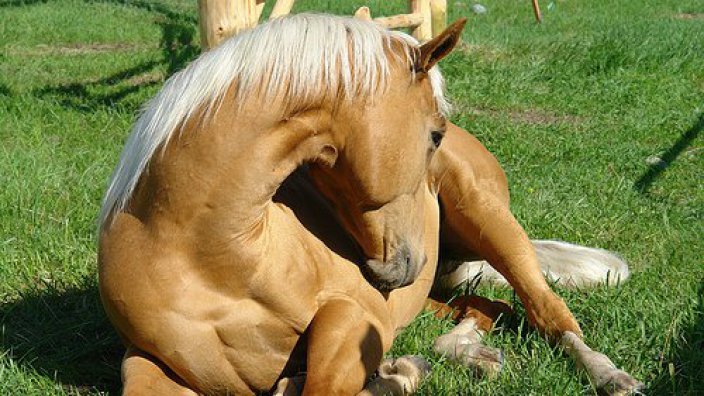
Colic is any form of abdominal pain - in people it would be called "stomach ache". Colic can be a very serious condition but more commonly it can be treated easily and it will have not long term effects. The pain often originates from the intestine but it can come from other abdominal organs such as the liver or ovaries. Typical signs are pawing with front legs, kicking up with back legs, turning to look at the flanks, lying down, rolling, and sweating. Other conditions such as choke, laminitis or atypical myopathy can mimic the symptoms of colic.

My horse has colic - is that serious?
90% of colic is benign and reversible - that is, it is not caused by something life threatening and will settle of its own accord. However about 10% of colic is caused by something more serious and needs urgent veterinary attention. In such cases, it is important not to leave it untreated - the longer it goes on the more serious it becomes. It is always best to treat colic as a veterinary emergency. If you are unsure of the severity of the problem and you are a client of this practice then please don't hesitate to phone us for advice.
My horse has colic - what should I do?
Make sure it is not in a place where it will injure itself if it rolls - a large, soft sand school is ideal. However, walking the horse may take its mind off the colic and help move any trapped gas.
Watch out for your own safety. A thrashing colicky horse can be dangerous and will have little regard for your safety. You are no use to your horse if you get injured!
Remove all feed.
If you are a client of this practice then phone us for advice; you may need a visit. We sometimes hear clients say they didn't think their horse's colic was serious because it was still passing droppings. Although that is a good sign, it does not rule out a more serious issue.
What makes a horse colicky?
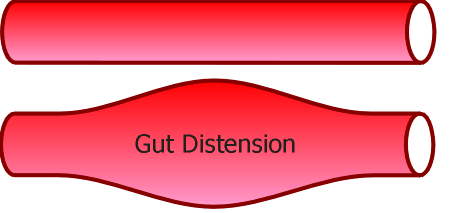
There are several reasons for intestinal pain. Abnormal motility of the intestine is probably the most common. This can result in a cramp-like spasm of the intestinal wall which may become painful. Some horses are more prone to this type of colic although it can also be associated with a sudden change in diet or management. Colic can also result from the intestine becoming distended and stretched. If a horse eats a large volume of fibrous feed such as straw and then stands in all day they may develop an impaction which stretches the wall of the intestine.
-
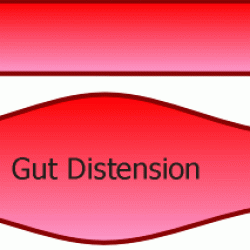
Normal intestine above. Distended intestine below. -
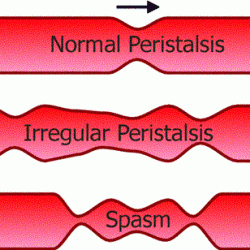
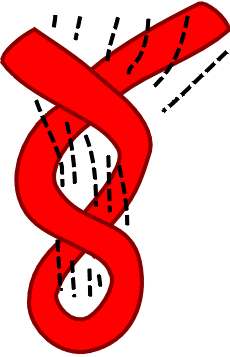
Different types of abnormal gut motility -
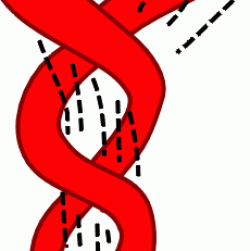
Twisted intestine

Why does a horse get colic?
The three main types of intestinal colic (spasmodic, impaction, gassy) are generally related to feed and management. A rich diet fed infrequently or a sudden change to rich grass are the most common causes of gassy or spasmodic colic whereas impactions are usually caused by inactive horses on box rest and eating a straw bed.
More severe forms of colic, such as a twisted or entrapped piece of intestine, are less predictable. There is not usually a clear cause and they are less likely to be caused by poor management. It was once thought that the act of a horse rolling causes the intestine to twist but that is now known to be wrong. Instead the pain of the twisted intestine causes the horse to be colicky and rolling is just one of the symptoms.
How can I prevent my horse from getting colic?
Horses should avoid eating overly rich diets, standing in all day or eating their straw bed. In general, horses eating plenty of grass (but not lush) or hay and getting lots of turn-out are less likely to get colic than those kept stabled and given excessive amounts of hard feed. Unfortunately it is the most serious forms of colic that are the least preventable.
Is colic surgery worthwhile?
Colic surgery has a successful outcome in around 85% of cases. Unlike orthopaedic surgery, the horse has a high chance of returning to full work. Unfortunately the cost of surgery and post-operative care is high and this alone is a good reason to insure your horse for veterinary fees. We are always happy to give up our time to help you decide whether referral is right for your horse.
-
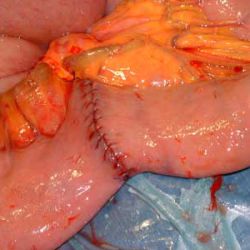
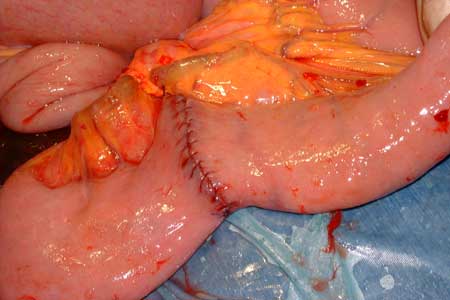
Small intestine after being rejoined surgically.