Gastroscopy
Find out more about our gastroscopy service, which can be a vital diagnostic tool for certain diseases in horses.
What is gastroscopy?
Gastroscopy is an essential diagnostic tool for the identification of Equine Gastric Ulcer Syndrome (EGUS) and Equine Glandular Gastric Disease (EGGD), a common cause of poor performance, weight loss, reduced appetite and resistance to ridden work.
It is the only reliable method to directly visualise the stomach and proximal duodenum, allowing accurate diagnosis and grading of gastric disease.
The examination is typically quick and well tolerated, with sedated horses experiencing minimal discomfort and usually remaining relaxed throughout the procedure.
How does it work?
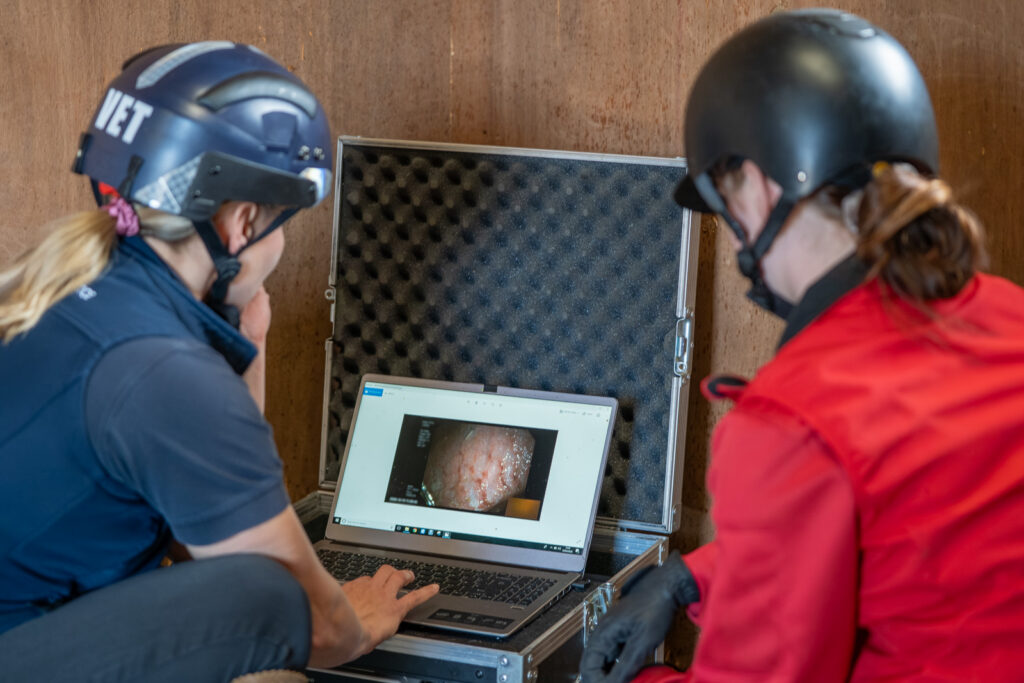
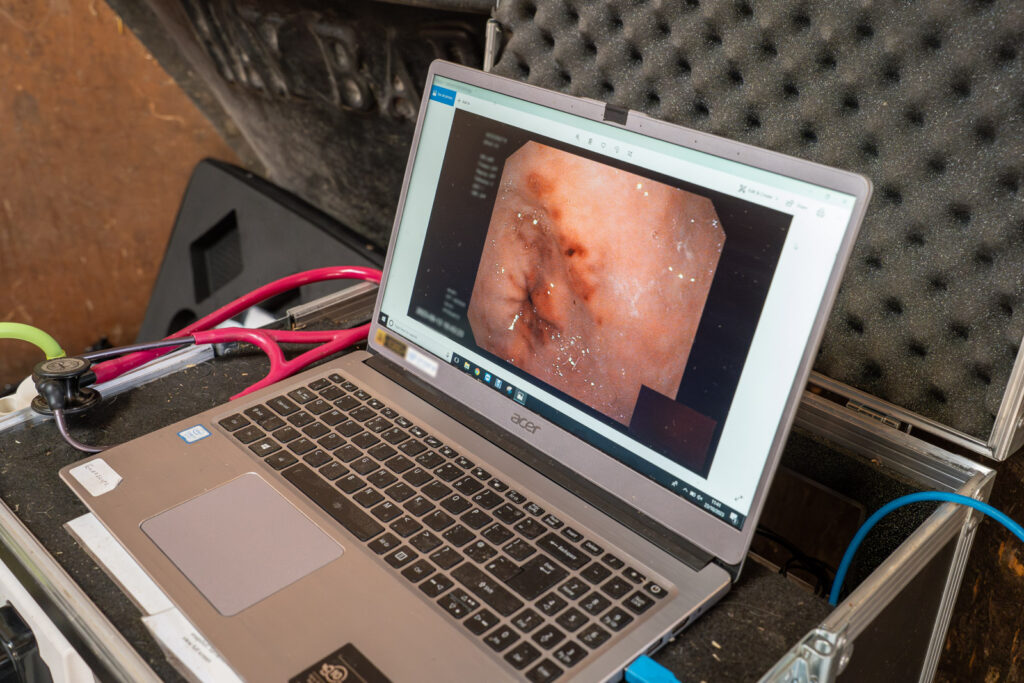
Gastroscopy involves passing a long endoscope through the horse’s nose, down the oesophagus and into the stomach. Our 3.5m digital gastroscopes allow full visualisation of the stomach lining and the first part of the duodenum.
Biopsies can be taken if required, enabling a precise diagnosis and tailored treatment plan.
Horses must be fasted overnight before the procedure to ensure the stomach is empty for optimal imaging.
Gastric ulceration
Gastric ulceration is common across all types of horses, although prevalence varies by breed, use and training level.
Thoroughbred racehorses are most commonly affected, but studies show 17-58% of showing and sport horses and up to 59% of pleasure horses may also develop ulcers.
Symptoms can include colic, poor appetite, weight loss, poor coat condition, diarrhoea, behavioural changes, and reduced performance.
How we can help
We offer a fully mobile video gastroscopy service, meaning examinations can be performed at your yard, as well as at our clinic.
All of our vets are trained and experienced in performing gastroscopy, ensuring safe, accurate and efficient procedures in any setting.
Our digital video gastroscopes capture high-quality images and allow image recording, which is invaluable for monitoring lesions over time and assessing response to treatment.
Video gastroscopy enables complete examination of the oesophagus, squamous and glandular regions of the stomach, the pylorus, and the proximal duodenum.
Repeat examinations can be performed to guide treatment and track healing.
Need advice or want to book an appointment?
If you suspect your horse may have gastric ulceration, or if you wish to organise a group yard visit for multiple gastroscopes at a discounted price, please contact our office on 01962 779111.